Marble, limestone, travertine, terrazzo, granite
Stone Care
Natural stone floors cleaned, honed, polished and sealed, with etching and dullness assessed before any work starts.
Every stone answers differently
Marble, limestone, travertine, terrazzo and granite all get called stone, and they do not behave alike. Marble and limestone are soft and sensitive. Travertine is pitted by nature. Terrazzo is chips set in a binder, and granite is the hard one of the group. A treatment that suits one can dull another.
That is why OCD HOME looks before it cleans. We confirm the exact treatment after assessing your surfaces, and we start by working out which stone is underfoot and what has happened to it: foot traffic, spills, years of the wrong cleaner.
The first question is usually whether the floor is dirty or dull. Those are two different problems, and they get two different fixes.
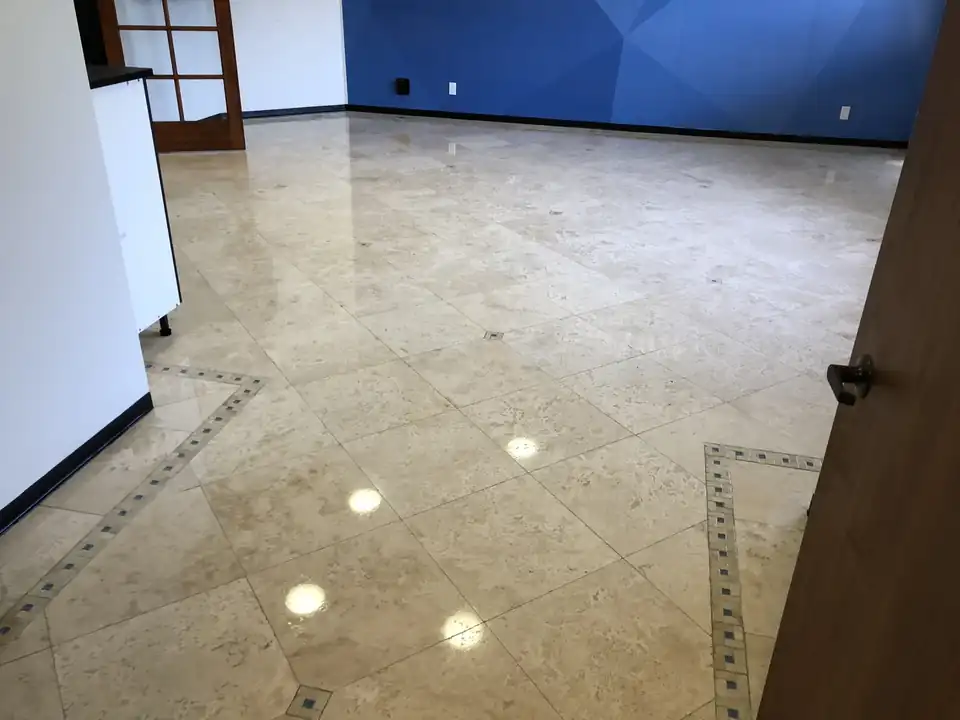
Polished cream stone floor with a dark inlay border reflecting the ceiling lights
Clean, hone, polish, seal
Cleaning lifts soil out of the surface and out of the pores. Honing levels a worn or etched surface so the finish is even again. Polishing brings the shine back after honing. Sealing slows the next stain from soaking in.
Not every floor needs all four. A stone entry that is only dirty may need cleaning and nothing else. A floor that has lost its gloss in the walking lane may need honing and polishing as well. We tell you which steps your floor actually needs.
Sealing is priced separately from the rest of the work, and it is quoted after we assess the stone. There is no flat per-foot figure for stone, because the right scope depends on the floor in front of us.
Etched, or just dirty?
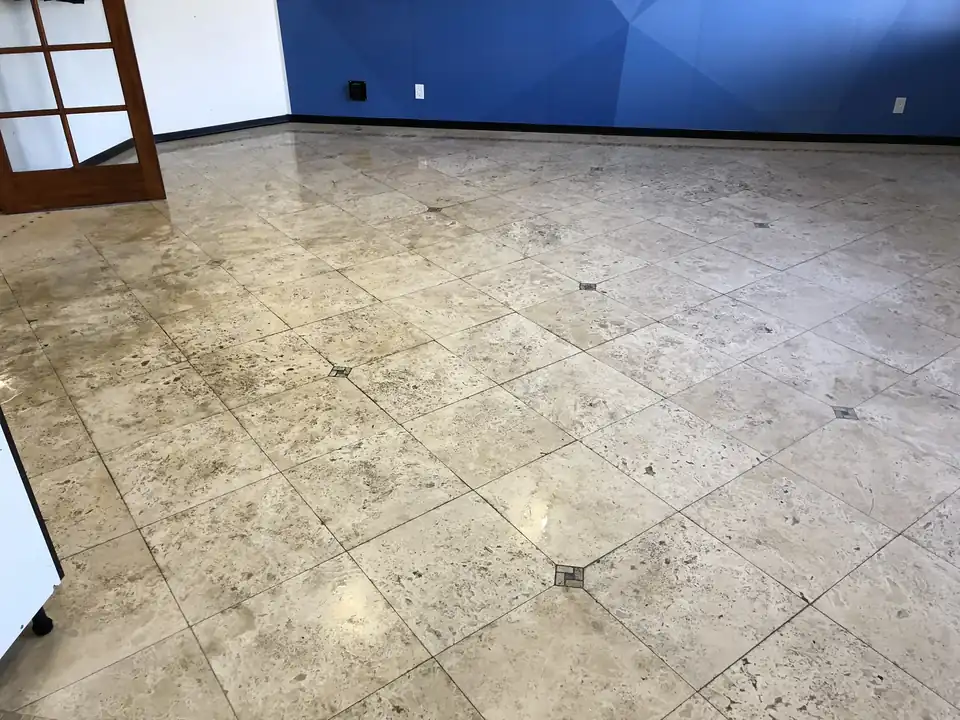
Etching is not grime. It is a dull patch where something acidic has eaten into the surface of calcium-based stone such as marble. Cleaning will not lift it, because there is nothing sitting on top to lift. It is the stone itself that changed.
This is why acidic cleaners are a problem on these floors. Vinegar, some bathroom products and citrus sprays can leave pale rings and a flat finish that reads as dirt. Hone and polish is the usual route back to an even shine on an etched floor.
We say plainly what cleaning can do. Wear, fading and deep etching are not always reversible, and a stain that has soaked in may not lift completely. You will hear that from us before the work, not after.
OCD HOME. IICRC Certified Firm, licensed and insured. Call (949) 979-5799.
5 stones, 4 steps
What each step does to the stone
The same four words come up on every stone floor. Here is what each one means in practice.
- Cleaning
- Lifts soil from the surface and pores
- Honing
- Levels etching and wear
- Polishing
- Restores the gloss after honing
- Sealing
- Priced separately
Ceramic and porcelain are cleaned differently, at a flat rate per square foot, on the tile and grout page. For the rugs that sit on top of a stone floor, see area rug cleaning, and every job is covered by the Every Inch guarantee.