Stone and Hardwood Floor Care: Etching, Cloudy Stone, and Cleaning Mistakes
Most hard-floor problems come from the cleaning choices we make, and knowing what you are looking at decides what can be fixed.
October 27, 2026 · 3 min read
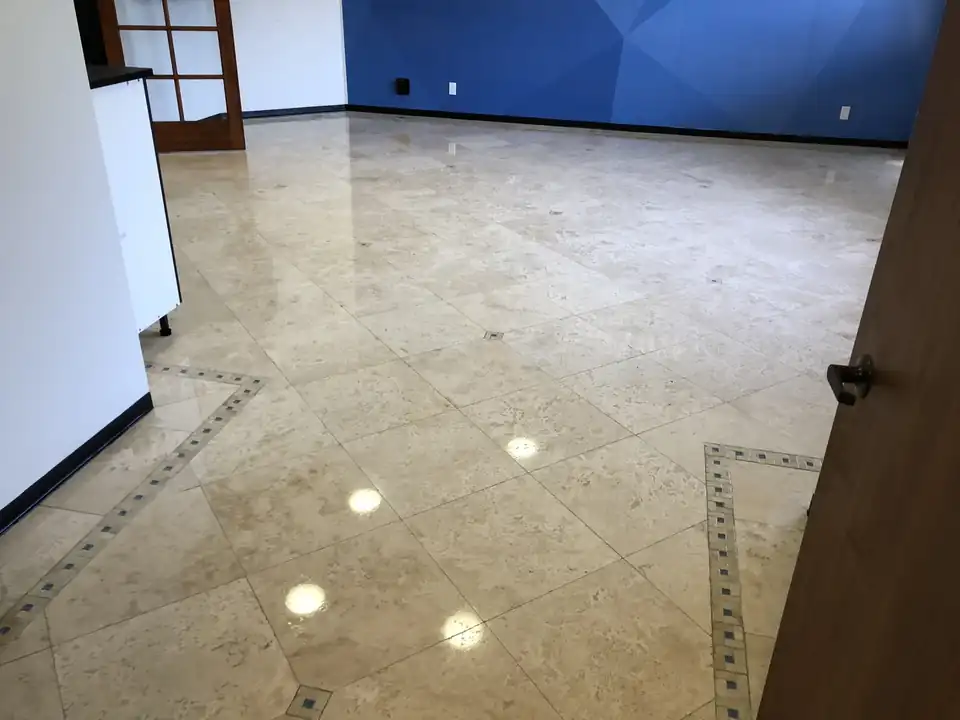
Hard floors look indestructible until something goes wrong. A lemon wedge dulls a marble counter. A shower wall that was once glossy turns cloudy. An oak floor develops a sticky haze no mop can shift. Most of these problems come from cleaning choices, not from neglect, and many can be improved once you know what you are looking at. This guide covers natural stone first, then hardwood and luxury vinyl plank.
Etching is not dirt
Marble, limestone, travertine, and terrazzo are built largely from minerals that react with acid. When an acidic liquid such as citrus juice, vinegar, wine, or many bathroom cleaners touches them, it eats away a microscopic layer of the surface. The result is a dull spot, often lighter than the surrounding stone, called an etch. You cannot wipe it away because it is not a stain or a film. It is a change in the surface itself. Granite is harder and tends to resist etching, but it is still porous and benefits from sealing.
It helps to know which problem you have, because each one has a different fix:
- Dirt and film: the stone looks better when wet, and a stone-safe cleaning brings it back.
- Etching: a dull ring, drip, or patch that matches where a liquid once sat and does not change when you wipe it.
- Staining: dark discoloration that has soaked into the stone, often from oil, dye, or something that sat too long.
Why shower stone turns cloudy
Shower walls and floors take the harshest treatment in the house: constant water, soap, shampoo, and cleaners. Soap scum and hard-water mineral film build into a cloudy layer that hides the stone's color. If a stone-safe cleaning removes the haze, you were looking at buildup. If the cloud remains after the film is gone, the surface may be etched, usually from acidic bathroom products, and it needs refinishing rather than more scrubbing.
Honing, polishing, and sealing
Honing uses abrasives to level the surface and remove etching and light scratches, leaving a soft matte finish. Polishing follows and brings back the gloss. Sealing then helps the stone resist liquids. Think of a sealer as a delay, not a barrier. It gives you time to wipe a spill before it soaks in, but it does not stop an acid from etching a calcium-based stone, because that damage happens right at the surface.
OCD HOME's stone care covers marble, limestone, travertine, terrazzo, and granite, with cleaning, honing, polishing, and sealing available. Sealing is priced separately, and the exact treatment is confirmed after the technician assesses your stone. If you have an etched vanity in a Laguna Niguel bathroom or a dull entry floor in Costa Mesa, say so when you book.
Hardwood and LVP: the mistakes that cause the most damage
- Using too much water. Wood swells at seams and edges, and standing water is its enemy.
- Running a steam mop over hardwood. Heat and moisture together can lift finishes and cup boards.
- Repeating vinegar-and-water or other homemade mixes. Over time they can dull the finish.
- Using oil soaps that leave a film, which attracts dirt and builds into a haze.
- Scrubbing with abrasive pads or sweeping with a gritty broom, which scratches the finish.
- Skipping mats and felt pads, so grit and furniture wear the floor down faster.
Luxury vinyl plank is water-resistant on the surface but not always at the seams, so avoid steam, standing water, and harsh solvents, and follow the manufacturer's care guidance. Laminate has similar limits: it does not enjoy puddles.
Wax buildup, and why cleaning is not refinishing
Floors that have been waxed or polished repeatedly develop yellowed, cloudy, or sticky layers, especially in kitchen traffic lanes. Cleaning can strip that buildup and bring out the finish underneath. OCD HOME's hardwood and LVP care covers solid, engineered, laminate, and LVP floors, including wax and polish buildup.
What cleaning cannot do is repair a finish that has worn through, erase deep scratches, or restore bare, gray, sun-bleached wood. That is refinishing, a sanding and recoating job, and OCD HOME is upfront that its maintenance cleaning is not refinishing. A clean floor shows you honestly what condition the wood is in, and sometimes that is the first step in deciding whether a refinish is worth it.
If your stone or hardwood needs a closer look, call or text OCD HOME at (949) 979-5799, email book@ocdhome.com, or book online. The team will assess the floor and tell you plainly what cleaning can do and what it cannot.
OCD HOME, (949) 979-5799
Call (949) 979-5799More articles
How Often Should You Clean Carpet in Orange County?
There is no single calendar date that fits every house, but there is a sensible way to decide when your carpet is due.
Pet Stains and Odors in Carpet: First Aid and When to Call a Pro
A practical guide for Orange County families on handling pet and kid messes before they set, and knowing when a surface clean is not enough.